

Books
Methods, research and writing on frame drums and the Italian tamburello — the part of the work that happens away from the stage.
Forthcoming — October 2026
Il tamburello in Europa tra 1700 e 1800
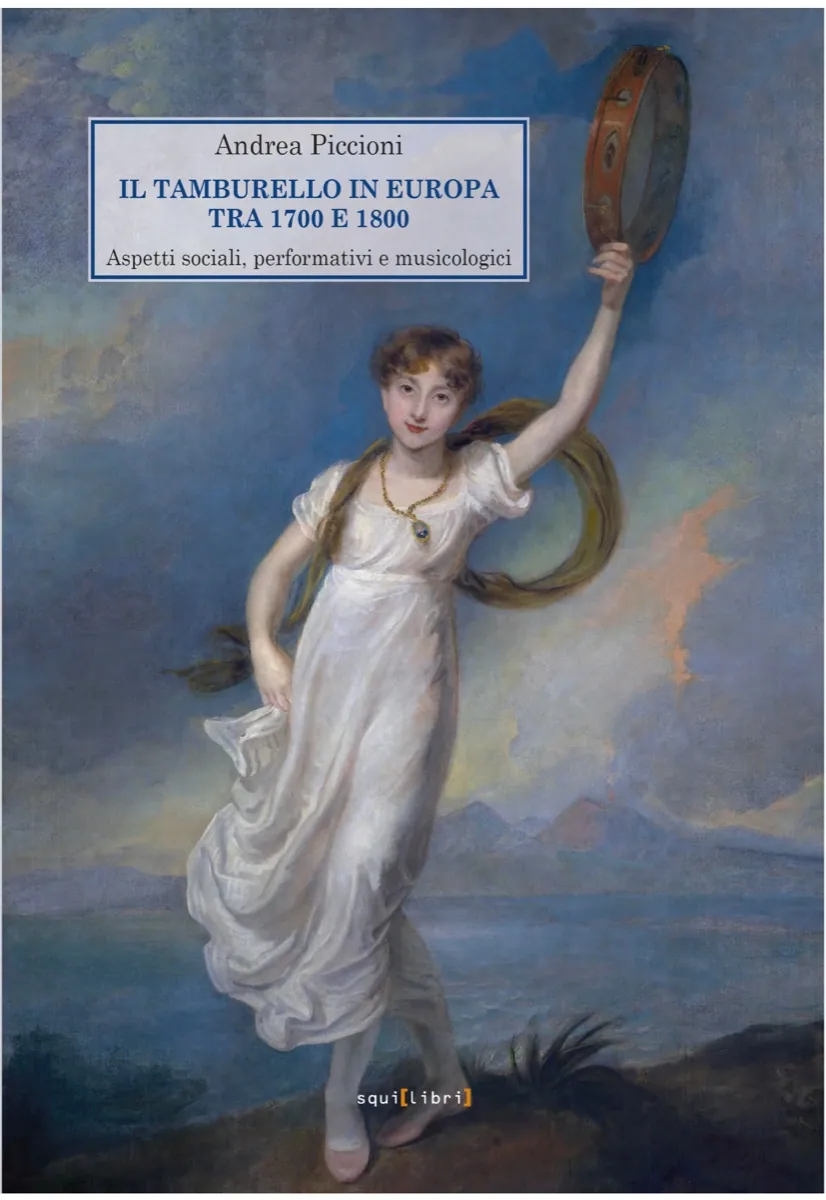
The tamburello in Europe, 1700–1800: social, performative and musicological aspects
Squilibri editore — Symphonia series, edited by the “Saverio Arlia” Conservatory of Nocera Terinese-Catanzaro. In Italian, out in October 2026.
The tamburello crosses the European eighteenth century and changes its skin: an instrument of ritual and village feast, it enters the drawing room and the concert hall — passing from the hands of painted maenads to those of young gentlewomen who make it their instrument of choice.
The book reconstructs that story for the first time, through written sources and a large body of images gathered over years of research in archives and libraries. A second, documentary part follows: the compositions for piano, tambourine and triangle by Clementi, Steibelt and Dale, given in full both in the original scores and in modern transcription.
The Frame Drum and States of Consciousness
An Autoethnographic Journey through the Science of Rhythm, the Anthropology of Trance, and the Pedagogy of Orality. Rivus Edizioni, 2026. Published in English and, as Il tamburo a cornice e gli stati di coscienza, in Italian.
Essay · EPUB e-book · € 9.99 · Rivus Edizioni, 2026 · ISBN 9791224700296 (eng) / 9791224700289 (ita)
Italian edition
Other stores
Amazon UK · Germany · France · Spain · Netherlands
Also on IBS, laFeltrinelli, Unilibro, Barnes & Noble and StreetLib.
Methods and other publications
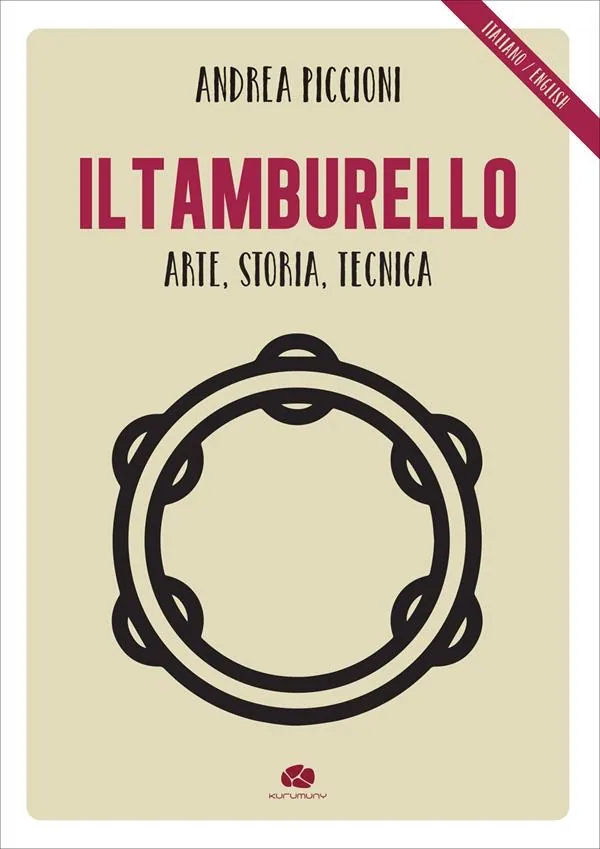
Il Tamburello. Arte, storia, tecnica
Italian and English edition
The first method devoted to the modern tamburello. The principal percussion instrument of Italian traditional music has four thousand years of unbroken, documented history: the book gathers that history together with construction and technique, and the technique videos are reachable by QR code.
Kurumuny, March 2024 · A4, 140 pages with colour plates · ISBN 9791281083394 · € 19.00
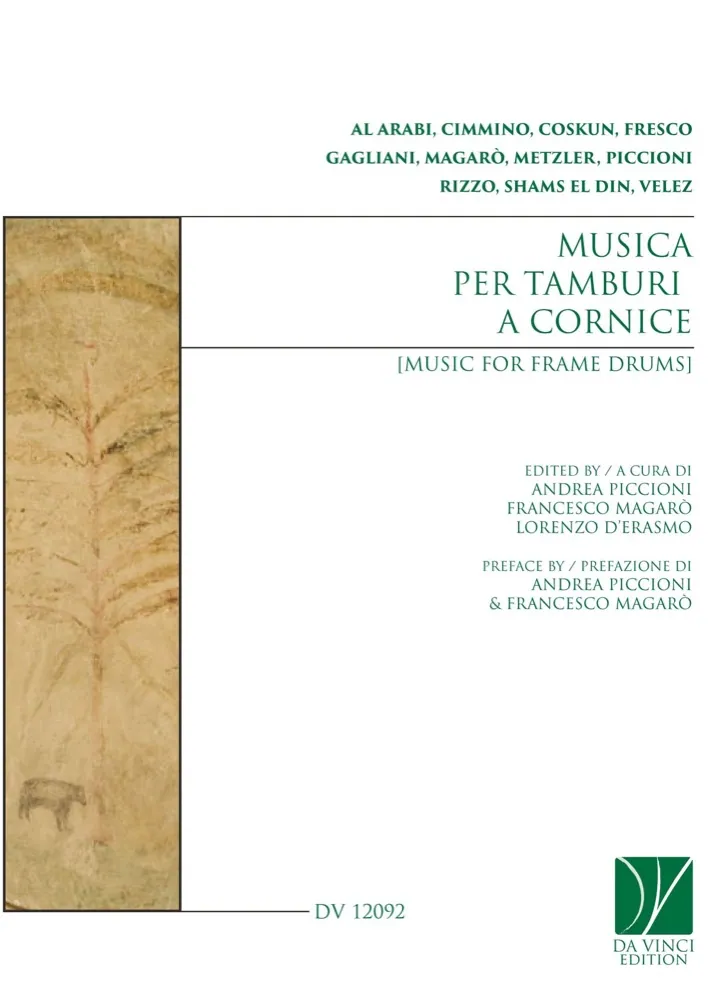
Music for Frame Drums
Musica per tamburi a cornice
An anthology of compositions for frame drums, edited with Francesco Magarò and Lorenzo d’Erasmo. It gathers pieces by Adel Shams el-Din, Glen Velez, Zohar Fresco, Murat Coşkun, Carlo Rizzo, Michael Metzler, Muhammad Al’-Arabi, Paolo Cimmino, Vincenzo Gagliani, Francesco Magarò and Andrea Piccioni.
Da Vinci Edition, 2024 · A4, 118 pages · ISMN 9790216210904 · € 35.90